
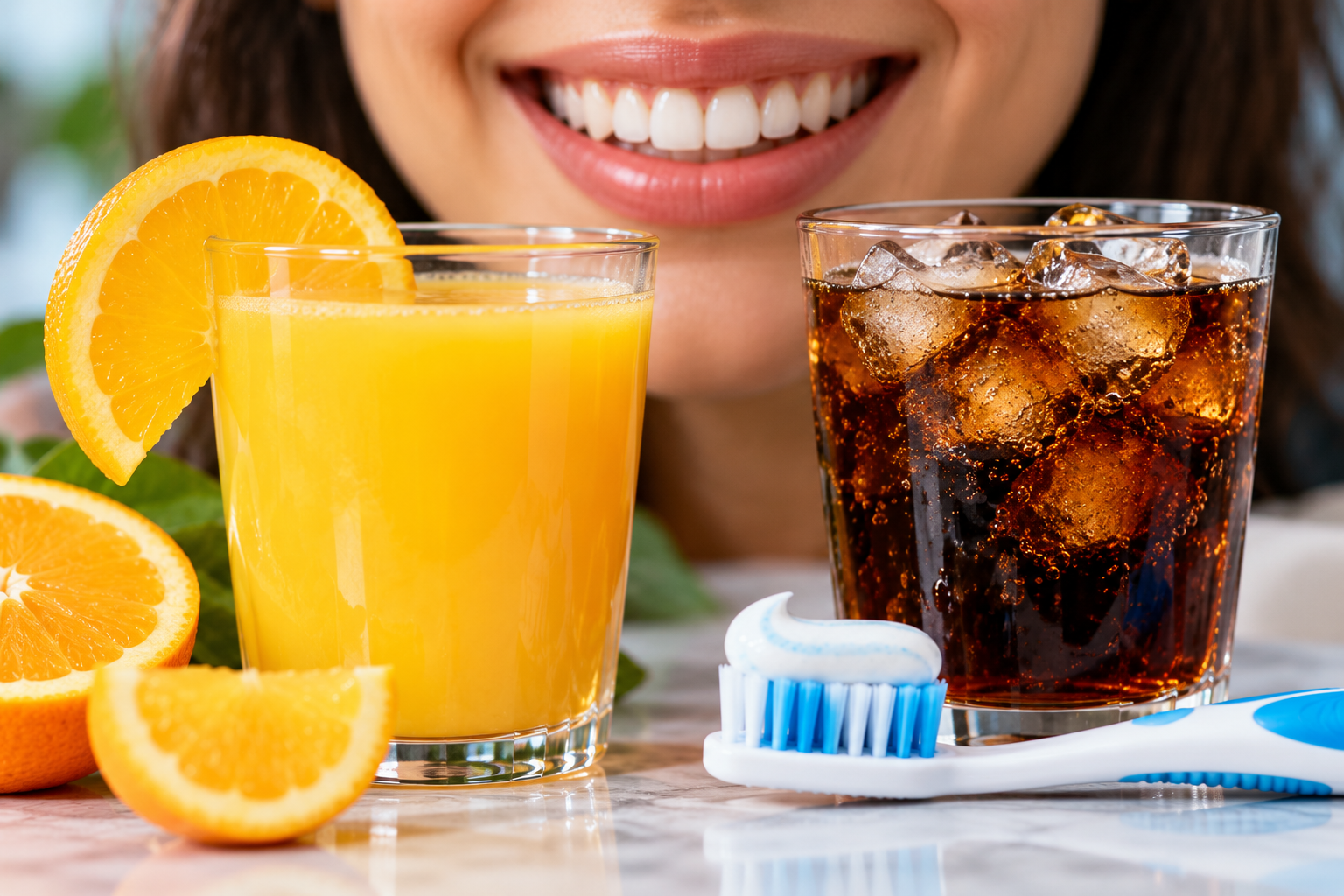
Many people know that soft drinks can be hard on teeth, so replacing soda with fruit juice may seem like a healthier choice. After all, fruit juice contains vitamins and comes from fruit, while soda is often associated with large amounts of added sugar.
However, when it comes to your teeth, the difference may not be as large as you think.
Both soda and fruit juice can expose your teeth to sugar and acids that may contribute to enamel erosion and cavities. At Kitchener Dentist Sherwood Dental, we often remind patients that choosing tooth-friendly drinks is not only about avoiding soda. It is also important to understand how other beverages affect your enamel throughout the day.
Why Is Soda Harmful to Your Teeth?
Most regular soft drinks contain sugar and acids.
The bacteria naturally found in your mouth feed on sugar and produce additional acids. These acids can attack the outer layer of your teeth, known as enamel.
At the same time, many carbonated beverages are already acidic before you even take your first sip.
Repeated exposure may gradually weaken enamel, making teeth more vulnerable to sensitivity, discolouration, and decay.
Diet soda may contain little or no sugar, but it can still be acidic. This means switching from regular soda to diet soda does not completely remove the risk to your enamel.
Is Fruit Juice Better for Your Teeth?
Fruit juice may provide nutrients such as vitamin C, but that does not automatically make it tooth-friendly.
Orange juice, apple juice, grapefruit juice, cranberry juice, and many other popular juices contain natural sugars. Some commercially prepared juices may also contain added sugar.
Fruit juices can also be highly acidic.
This combination of sugar and acid means that regularly sipping juice can contribute to both enamel erosion and tooth decay.
A glass of juice with breakfast is very different from sipping juice repeatedly throughout the morning. The more often your teeth are exposed to acidic or sugary drinks, the less time your saliva has to help neutralize acids and protect your enamel.
Whole Fruit Is Usually a Better Choice
Eating a whole orange or apple is generally better for your teeth than drinking the juice.
Whole fruit contains fibre and requires chewing, which helps stimulate saliva production. Saliva plays an important role in protecting teeth by washing away food particles and helping neutralize acids.
Juice removes much of the fibre while concentrating the natural sugars into an easy-to-drink form.
For example, you might not normally eat several oranges in a few minutes, but a glass of orange juice can contain juice from multiple oranges.
That can expose your teeth to more sugar and acid in a short period.
Signs Acidic Drinks May Be Affecting Your Teeth
Enamel erosion can happen gradually, so you may not notice a problem right away.
Possible signs include:
- Increased sensitivity to hot, cold, or sweet foods
- Teeth that appear more yellow as the enamel becomes thinner
- Rounded or worn tooth edges
- Small chips or rough areas on the teeth
- Increased sensitivity when brushing
- Cavities developing more frequently
These symptoms can have several causes, so have them evaluated rather than assuming juice or soda is responsible.
A dentist can check whether you are experiencing enamel erosion, tooth decay, gum problems, grinding, or another dental concern.
How to Drink Fruit Juice More Safely
You do not necessarily have to eliminate fruit juice completely.
A few simple habits can reduce how much time your teeth are exposed to sugar and acid.
Try drinking juice with a meal rather than sipping it over several hours. Meals increase saliva production, which can help neutralize acids.
Keep serving sizes moderate and choose 100% fruit juice when possible rather than juice drinks with added sugar.
Drinking through a straw may also reduce how much the beverage contacts the front surfaces of your teeth.
After having juice, rinse your mouth with plain water.
Avoid brushing your teeth immediately after consuming an acidic drink. Acid temporarily softens the enamel surface, and brushing too soon may contribute to wear. Waiting around 30 to 60 minutes before brushing gives your saliva time to help neutralize the acidity.
What Should You Drink Instead?
For your teeth, plain water remains one of the best everyday choices.
Water helps rinse away food particles and contains no sugar or acids that feed cavity-causing bacteria.
In communities where tap water contains fluoride, drinking fluoridated water can also help strengthen enamel and reduce the risk of tooth decay.
Milk can also be a tooth-friendly option for many people because it contains calcium and other nutrients that support healthy teeth.
The main concern is frequency. Even a beverage that seems relatively healthy can become problematic if your teeth are exposed to sugar or acid continuously throughout the day.
Preventive Dental Care Still Matters
Changing your drinking habits can reduce your risk of dental problems, but it does not replace regular dental care.
Brushing twice a day with fluoride toothpaste and cleaning between your teeth daily are key to protecting your smile.
Regular examinations also help your dental team identify early signs of enamel erosion or cavities before they become bigger problems.
During your visit to Kitchener Dentist Sherwood Dental, your dental team can also discuss your diet, beverage habits, sensitivity, and cavity risk, and suggest changes that fit your lifestyle.
Professional cleanings are another important part of preventive care because plaque and tartar can build up in areas that are difficult to clean thoroughly at home.
Soda vs. Fruit Juice: What Is the Better Choice?
Switching from soda to fruit juice may offer nutritional benefits, but it shouldn’t be seen as complete protection for your teeth.
Both beverages can contain sugar and acids that may damage enamel when consumed frequently.
If you enjoy fruit juice, have it in moderation, preferably with meals, and drink water regularly throughout the day. Choosing whole fruit more often can also help you get the nutritional benefits of fruit without exposing your teeth to concentrated juice as frequently.
If you are concerned about enamel erosion, tooth sensitivity, or cavities, Kitchener Dentist Sherwood Dental can help you understand what may be affecting your teeth and recommend appropriate preventive or restorative care.
To schedule an appointment or speak with our dental team, contact Sherwood Dental at 519-576-2170.
DISCLAIMER: The advice offered is intended to be informational only and generic in nature. It is in no way offering a definitive diagnosis or specific treatment recommendations for your particular situation. Any advice offered is no substitute for proper evaluation and care by a qualified dentist.
