
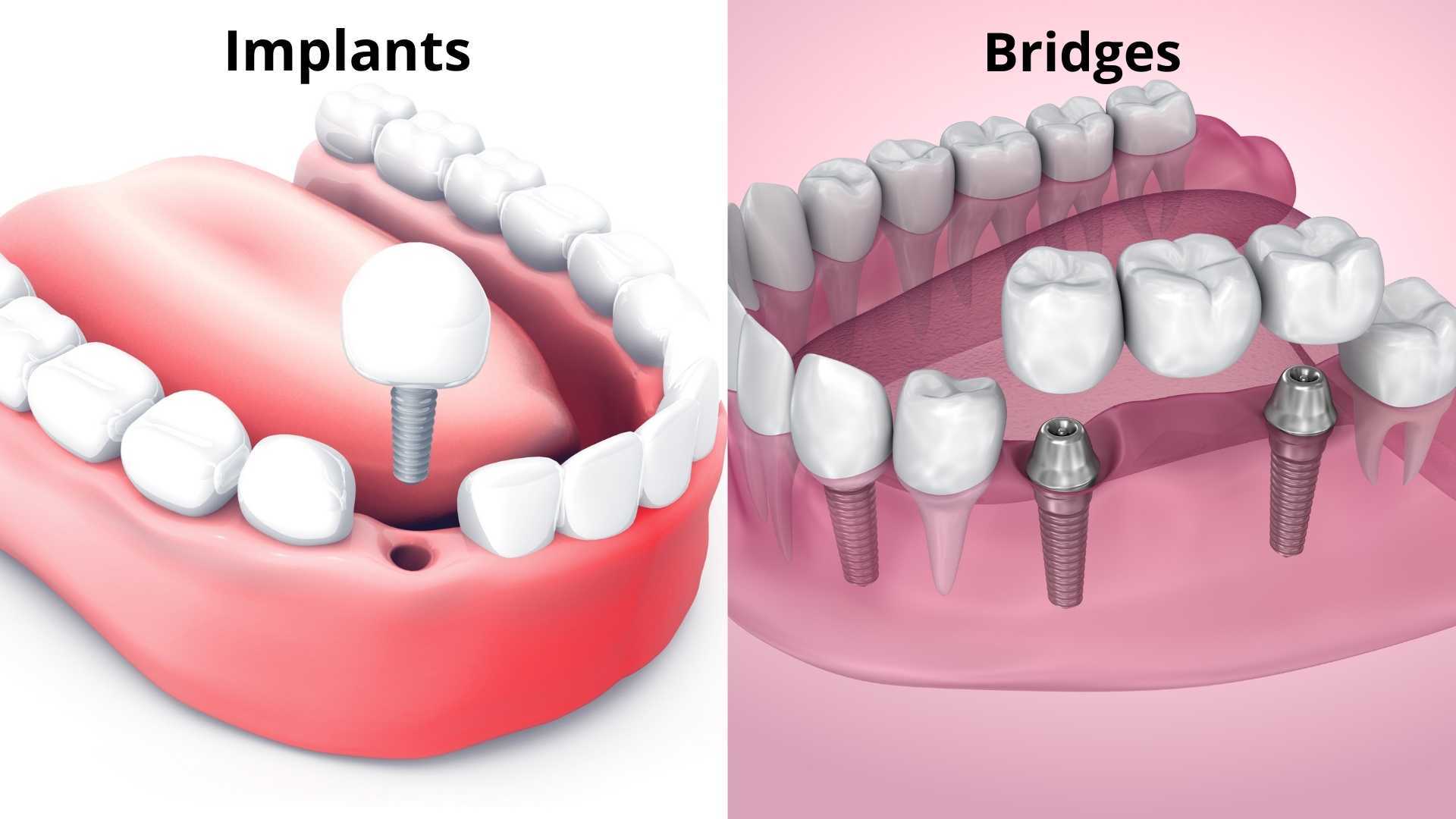
Dentist Dentistry is a fast-paced field that’s never ending in innovations. Dentists are continuously developing new ways to improve dental health and provide better patient care. One of the latest trends in Dentistry is using implants or bridges for missing teeth. Implants are fixtures, usually made from titanium, which are inserted into the bone to replace missing tooth roots. Bridges are affixed over the gap left by one or more missing teeth with artificial crowns on either end, spanning it like a bridge over water. Both offer patients many benefits including improved chewing ability and speech as well as being esthetically pleasing replacements for lost teeth.
Implants are a good option for people who have lost teeth.
Implants can be used to support a bridge or denture and they help prevent jaw bone loss. Dentists typically recommend implants for people who have lost all four wisdom teeth, senior citizens and young adults because this group is most affected by the damage done to their mouth from missing teeth.
An implant is a dental restoration that replaces a missing tooth root and provides a foundation for a replacement tooth or bridge. An implant can last as long as your natural teeth, because it has the same strength. With implants, you can have back all of your smile’s functionality and esthetics.
Why Choose Dental Implants over Dentures?
Dentures are an affordable way to replace missing teeth, but they can cause gum problems and speech difficulties. They also look unnatural and will need to be replaced every few years. Dental implants, on the other hand, are surgically placed screws that act as artificial tooth roots. Implants are made of titanium metal, which bonds with the jawbone to form a strong, stable foundation for artificial teeth. Implants are permanent and require little upkeep. Plus, they look natural and do not cause the same problems that dentures can cause, such as gum disease or problems with speech.
Dental implants are the best choice for replacing missing teeth because they ensure a stable foundation for replacement teeth. Implants are more secure than bridges and dentures, which can slip out of place. Dental implants are an ideal long-term solution that is virtually invisible to others.
Benefits of dental implants and bridges
The main benefit of both implants and bridges is the replacement of one or more missing teeth. Both achieve this result by anchoring false teeth to a natural tooth, which helps provide stability and comfort for those who use them.
Each type offers advantages as well as disadvantages, depending on your particular needs and expectations. As with any dental procedure , it’s best to gain as much knowledge about both dental implants and bridges before making any decisions.
For example, if one or more of your remaining teeth are in poor condition and require root canal treatment or extraction, implants may be a better option than bridges. On the other hand, if you’re looking for something that’s cost-effective and can be used to replace several missing teeth at once, then a bridge might work best.
Most common problem with dental implants
The most common dental implant problem is an infection at the surgery site. Although rare, implants can also pose a risk of rejection, where your body perceives the implants as foreign objects and tries to push them out. This usually occurs within the first few months after surgery or if your implants are damaged or have become loose. Due to this potential for rejection, implants may not be appropriate for patients with autoimmune diseases such as rheumatoid arthritis or psoriasis.
If an infection occurs after implant surgery, it’s usually treated with antibiotics and local debridement (removal of dead tissue). Rejection treats using either medication to reduce your body’s immune response or more severe measures like membrane transplants.
How to Choose Between a Dental Bridge or Implant
Dental bridges are permanent fixtures attached to teeth either side of the gap left by missing teeth. They essentially act like false tooth roots, giving you something to chew against and stop your remaining natural teeth from shifting out of place.
A bridge is an option if you’ve got some good quality anchoring teeth on either side of the gap that can hold the false teeth firmly in place. They’re also a good option if you want to replace several missing teeth at once (if your natural teeth and gums are healthy and strong enough for treatment).
Bridge placement consists of two stages. The first stage is the crowns being created for each anchoring tooth, then the false teeth are attached to them. During this stage, you may be fitted with temporary bridgework to protect your gums and allowed to chew again until the final bridge is ready.
The second stage sees the bridge being cemented into place. This is done once the gums have fully healed. However, this final stage may be delayed if you experience a problem with your temporary bridgework or you need more time to adjust to it.
FAQs about implants and bridges
How long does a dental implant last?
A dental implant can last a lifetime – but this depends on your oral health, how well you care for your implants and whether or not you experience any trauma to the area. Over time, as bone loss takes place due to aging, implants may need to be replaced. This usually occurs after ten years of use.
An individual tooth implant has a success rate of 95 percent, while a dental implant supported bridge has an 85 percent success rate.
What are the different types of implants?
There are a number of different types of dental implant, including implants that have a porous texture which enables bone to grow around them and those with a rough surface that stimulates the growth of cells.
How is an implant placed?
A small surgical hole is made in your gum to give access to the jawbone where the implant will be placed (usually this is done below the gum line). A small cut in the bone is made to accommodate the implant.
A dental implant is then placed into position using either a robotic arm or manually by your dentist, depending on which type you have. The area heals over the course of several months, until your jawbone creates a secure connection with your implant.
DISCLAIMER: The advice offered is intended to be informational only and generic in nature. It is no way to offer a definitive diagnosis or specific treatment recommendations for your particular situation. Any advice provided is no substitute for proper evaluation and care by a qualified dentist.
